
Chikiriya Original - Handmade Takatori Chawan Bowl & Whisk Stand - Ame
All taxes included. Shipping calculated at checkout
%0AThis%20chawan%20(%E8%8C%B6%E7%A2%97)%20and%20this%20whisk%20stand%20(%E3%81%8F%E3%81%9B%E7%9B%B4%E3%81%97)%20is%20dressed%20in%20an%20ame%20(%E9%A3%B4)%20glaze,%20an%20iron-based%20glaze%20that%20fires%20to%20a%20warm,%20honey-amber%20tone,%20one%20of%20the%20classic%20effects%20of%20iron...)
Teaware from Kyushu (高取焼)
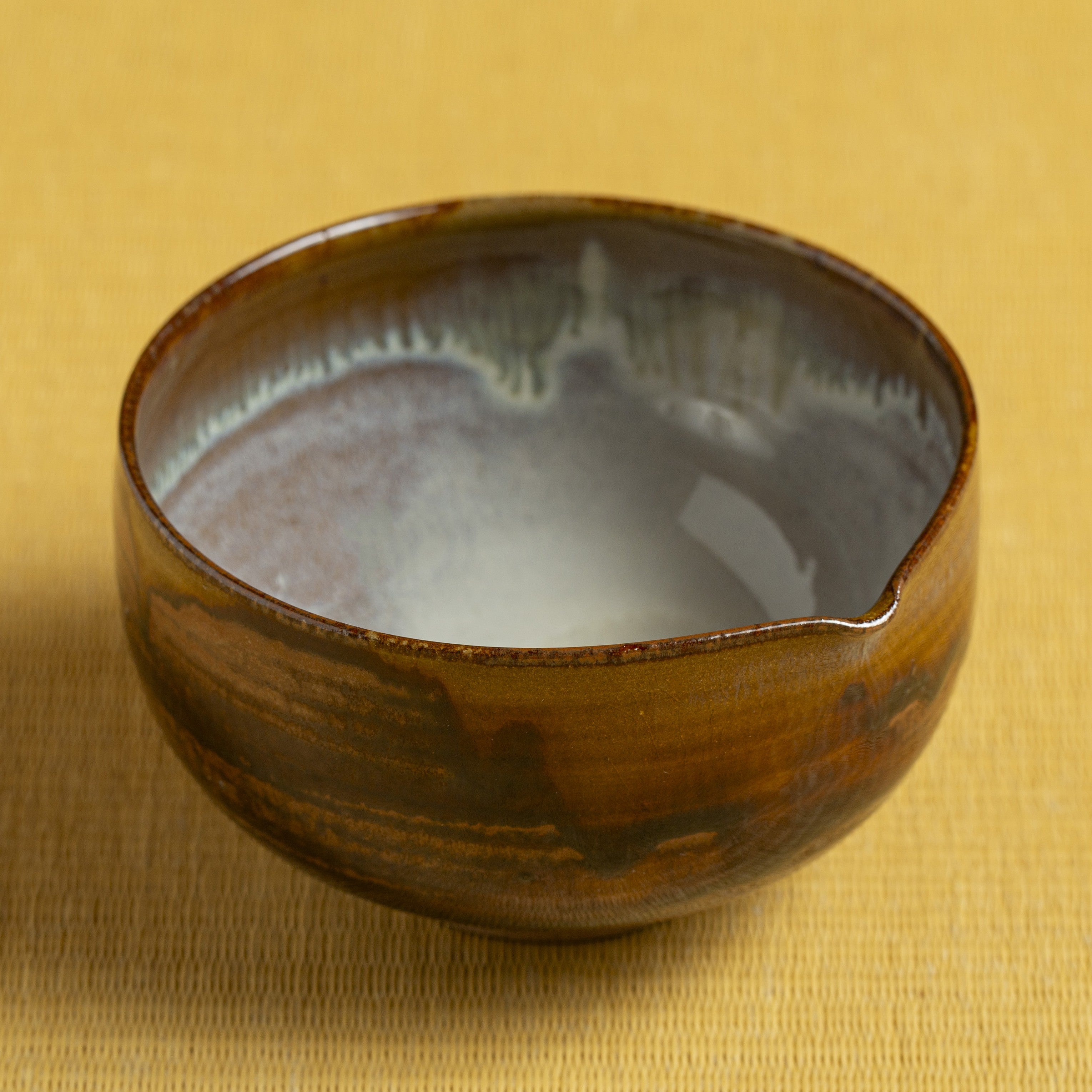
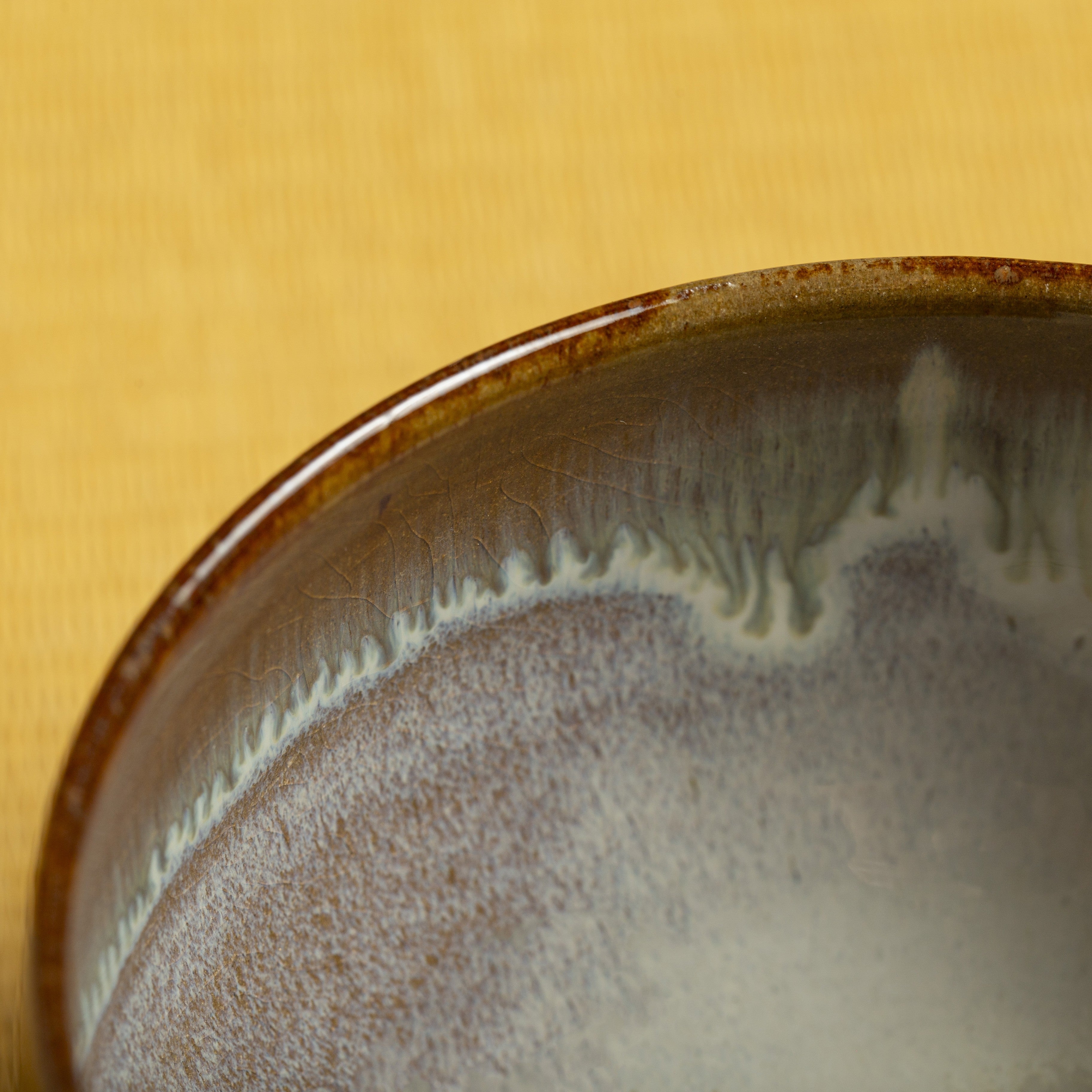
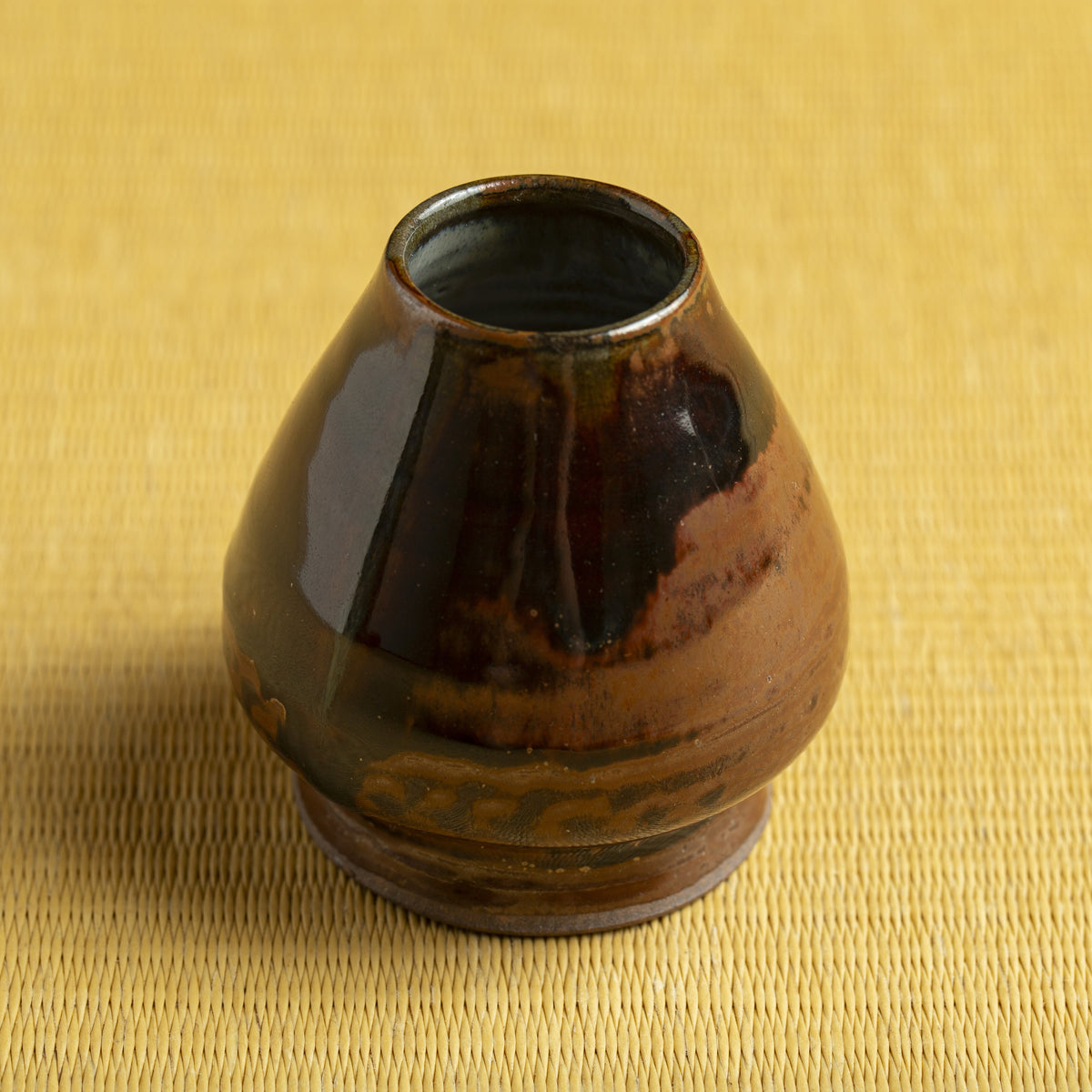
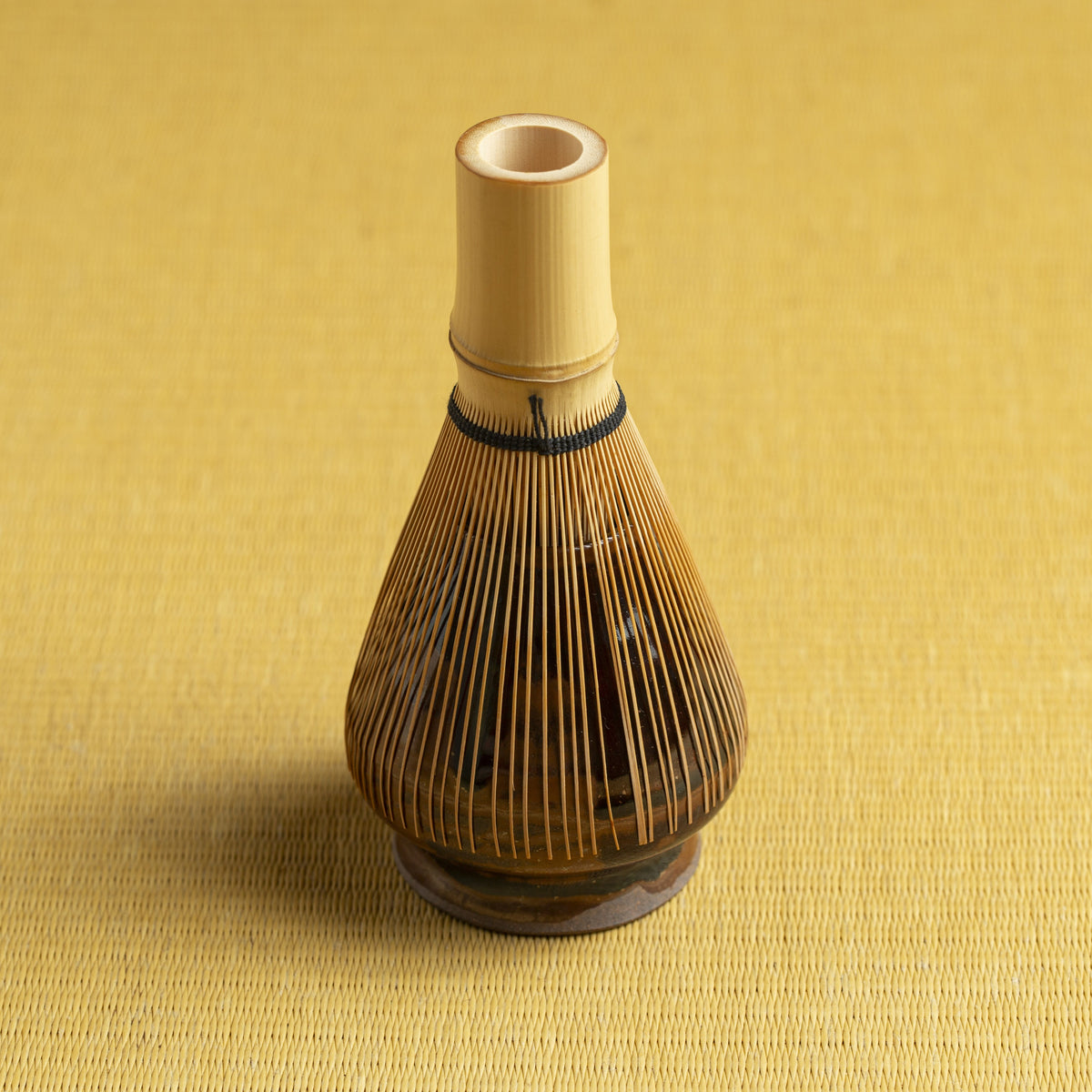
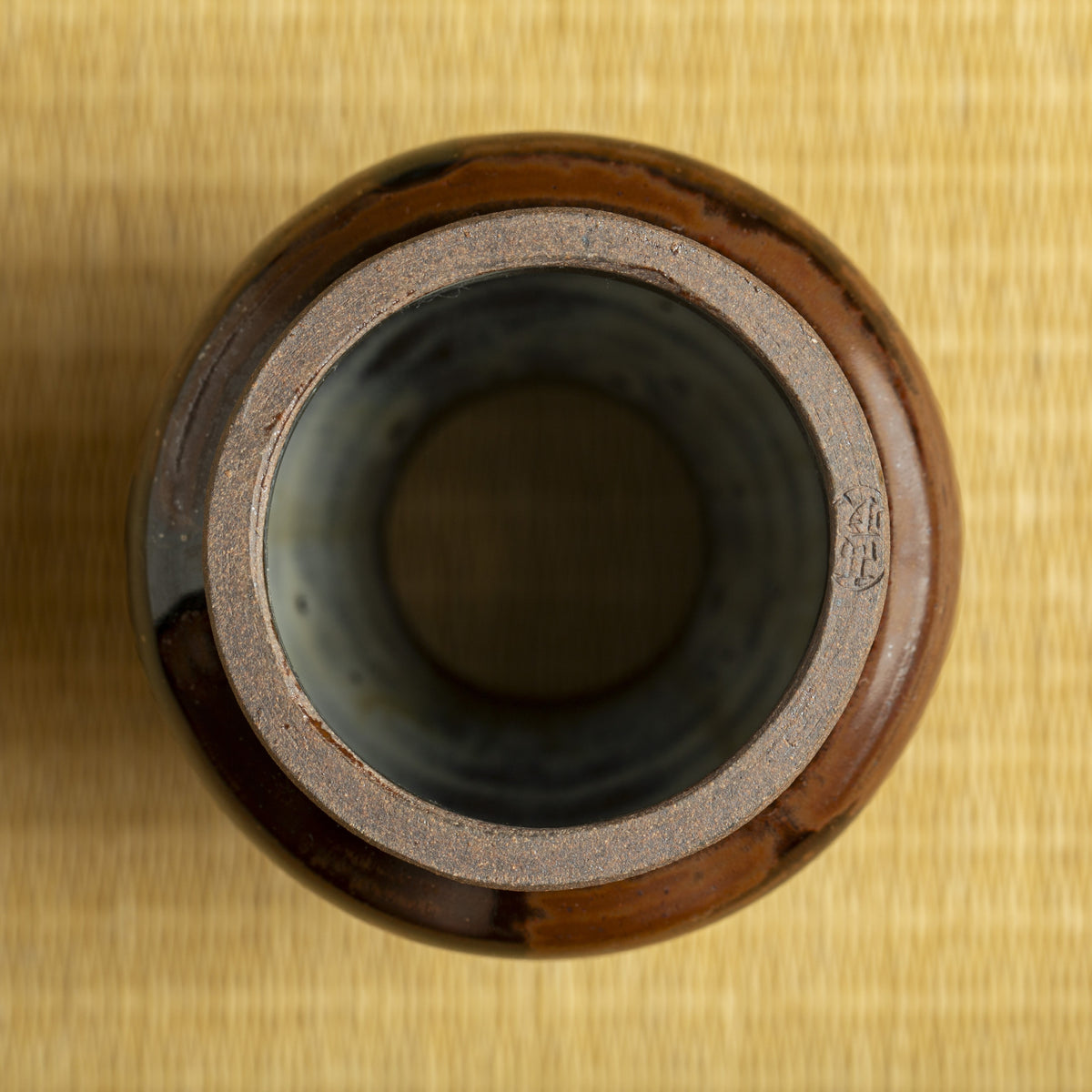
This chawan (茶碗) and this whisk stand (くせ直し) is dressed in an ame (飴) glaze, an iron-based glaze that fires to a warm, honey-amber tone, one of the classic effects of iron in an oxidizing kiln. Inside, the glaze shifts to a soft blue-grey, the two tones drifting into each other around the rim.
The drips running down the body aren't added after the fact. They come from the way the glaze is layered and poured over the piece before firing, a technique long used at Kyushu kilns: gravity and the heat of the kiln finish the pattern, and where two layers meet in the fire, they fuse in some places and separate in others. No two bowls come out the same.
Takatori kilns traditionally work with a family of glazes, counted as seven, sometimes extended within individual workshops: amber, persimmon, celadon, and a mottled blue-grey called namako (海鼠) among them. Despite the layered glaze, Takatori ware is known for being thin-walled, almost like porcelain, light in the hand, and for ringing with a clear, high note when tapped.
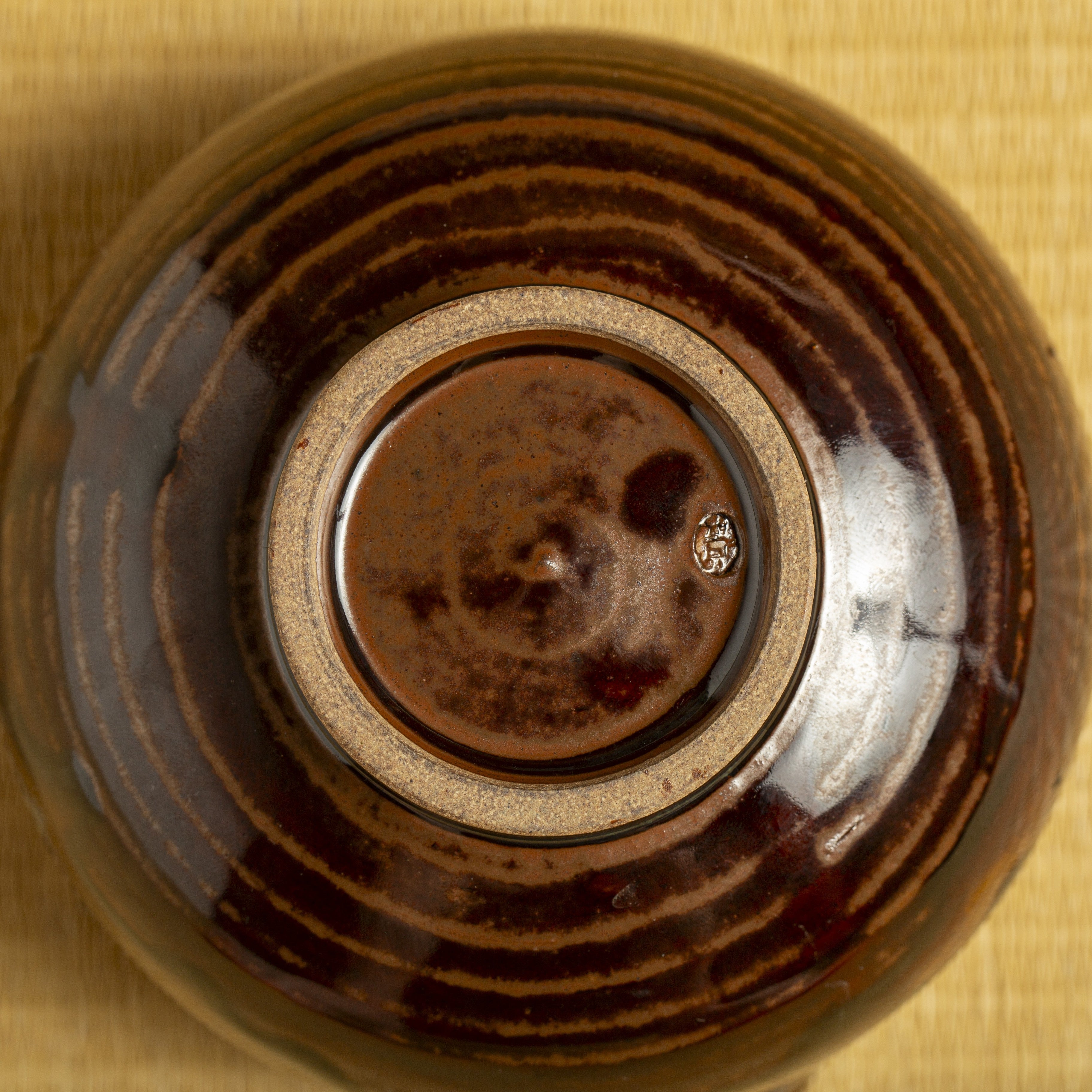
Every stage, from wedging the clay to the final firing, is done by hand. The kiln is wood-fired and the materials are natural, so no two pieces are ever quite alike; the finished surface is, in part, a gift from flame no hand can fully control.
A Short History
Takatori ware (高取焼) began around 1600, when the Korean potter Hassan (八山), given the Japanese name Hachizo Shigesada (八蔵重貞), came to Japan under the lord Kuroda Nagamasa and built the first kiln at the foot of Mount Takatori, near present-day Nogata City.
The Hassen Kiln
Our kiln continues the line of Takatori Hachinojo Sadamasa, grandson of founder Hachizo. After his death in 1665, the kiln moved to what is now Koishiwara, then to its current site in Sarayama in 1669, beginning the "Koishiwara Takatori" line.
When Japan's domain kilns were abolished in 1871, the tenth head, Yasunojo Shigenobu, kept the kiln alive alone until 1914, when he entrusted its techniques to Fukushima Sashichi of the neighboring Nakano kiln (grandfather of the 13th-generation Hassen). Yasunojo then took the name Takatori Hassen (高取八仙), combining the family's traditional "Hachi" character with the Fukushima crest, becoming the 11th generation.
His daughter, 12th-generation Hassen Komaki, preserved the glazes through the war years and passed them to her son, the 13th-generation Hassen, who studied under archaeologist Miwa Yanosuke and built the foundations of the kiln as it stands today. It is now led by the 14th generation, Hachinojo Fubo, with the 15th generation and kiln heir, Shuichiro, already working alongside him.
※ Do not put in microwave or dishwasher.
Product information
Product information
Product type: Teaware
Place of origin: Japan
Product size: 13.3x13.3x7.6 cm
(5.2″ x 5.2″ x 3.0″)
Choose options