
Article: The Beginnings of Ureshino Tea
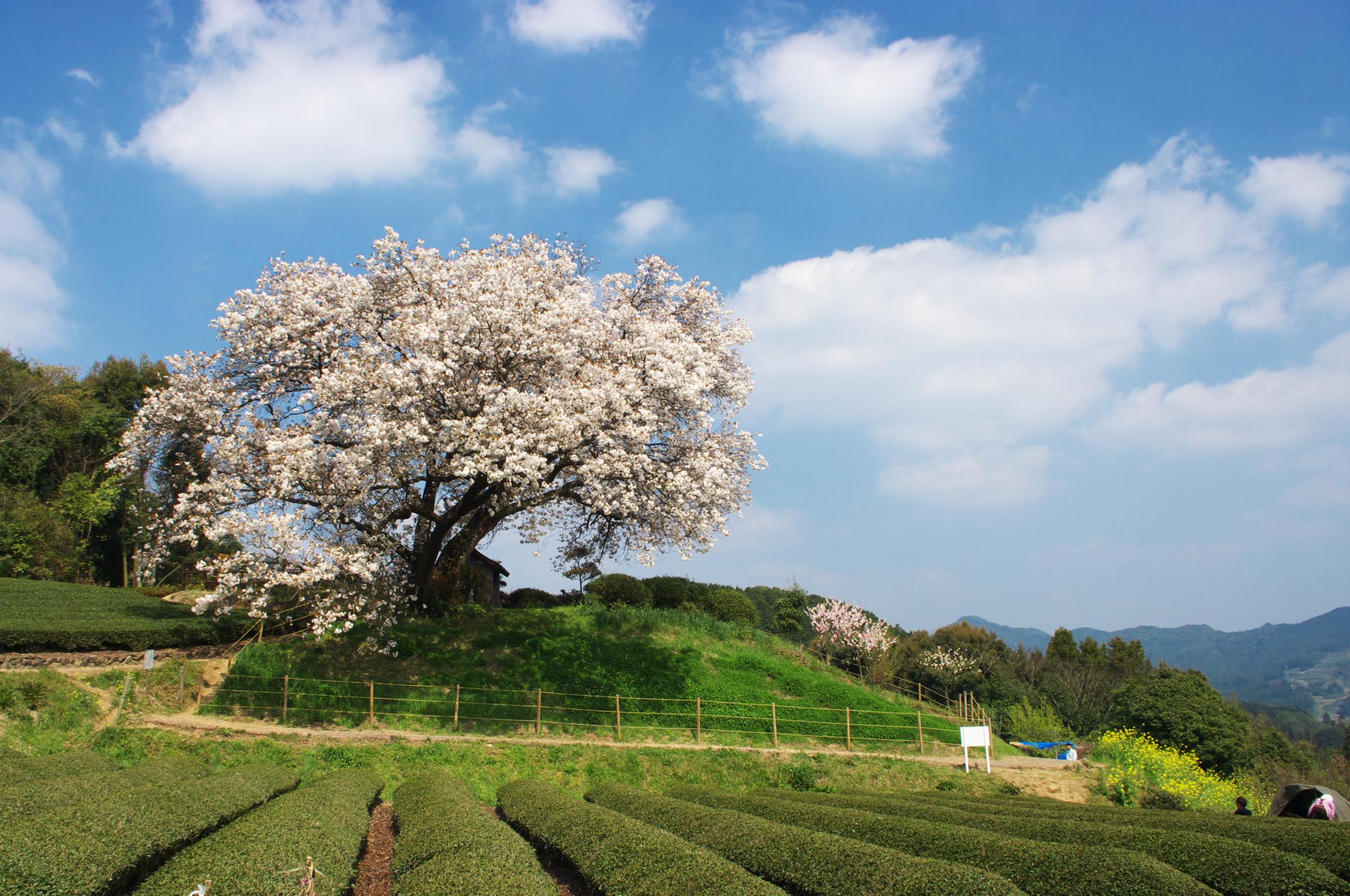
The Beginnings of Ureshino Tea
The History of Ureshino Tea

Ureshino tea is said to have originated in 1440, when a potter from China (Ming dynasty) who settled in Ureshino cultivated and processed tea for his own use. In 1504, another Chinese potter, Hong Lingmin (紅令民), brought with him a Nanjing iron pan and introduced the pan-fired tea manufacturing method that was popular in China at the time. This marked the beginning of the spread of Ureshino tea.
At the beginning of the Edo period (1603–1868), Yoshimura Shinbei (吉村新兵衛) sought to industrialise tea production in Ureshino. Records of Ureshino tea from this era were left by many travellers who stayed at Ureshino-juku (a post town) along the Nagasaki route (Nagasaki Kaidō), including the artist Shiba Kōkan (司馬江漢) and the thinker Yoshida Shōin (吉田松陰), as well as the German physicians Engelbert Kaempfer and Philipp Franz von Siebold.
By the end of the Edo period, large quantities of Ureshino tea were exported to the United States by a female Nagasaki merchant, Ōura Kei (大浦慶). This is considered Japan’s first tea trade conducted by a private citizen.
Characteristics of Ureshino Tea

The main variety of Ureshino tea is Tamaryokucha. Tamaryokucha is produced in much the same way as sencha, but because the final leaf-shaping process is omitted, the leaves are dried without being refined into thin needles. As a result, they curl into a rounded, comma-like shape (magatama), which gives the tea its name.
Tamaryokucha is also known as guricha, referring to its rounded, coiled appearance. There are several theories regarding this name: one suggests it derives from a corruption of “green tea,” reflecting its past mass production for export, while another links it to the guri cloud-like patterns seen in Buddhist paintings and temple decorations. In Shizuoka, it is also called yonkon. The name Tamaryokucha was officially adopted in 1932.
TDepending on how oxidation is halted during processing, Tamaryokucha is produced either by steaming or pan-firing. Until the pre-war period, most Tamaryokucha was pan-fired, but after World War II production gradually shifted toward steaming. Today, approximately 98% of Tamaryokucha production is steamed.
Pan-fried green tea
Pan-fired Tamaryokucha is made using a traditional method introduced from China and was once known as Tō-cha ("Tang tea"). There are two types: Ureshino-made from Saga, which uses a special tilted kiln, and Aoyagi-made from Kumamoto and Miyazaki, which uses a conventional iron pot. Ureshino-made tea is said to have been introduced by the Chinese in the mid-15th century, while Aoyagi-made was a widely used home-brewing method in western Japan. With mechanisation in the early Shōwa period, the differences between the two are now largely indistinguishable.
Pan-fried tea has little grassy aroma and possesses a distinctive fragrance known as kamaka, along with a clean, refreshing taste. As it requires numerous manual processes and is time-consuming, it has almost fallen out of use since the steaming method was developed during the Edo period, making it a rare tea.
Steamed tamaryokucha
Steamed tamaryokucha was originally developed as an improved version of kamairicha. (Kamairicha is a Japanese green tea that is pan-fried instead of steamed, giving it a smooth, lightly roasted aroma and a naturally low bitterness.) Around 1930, in an effort to export Japanese tea to regions of the Soviet Union where Chinese-made kamairicha remained popular, producers sought to create a tea with the same shape as kamairicha but which could be made using the same machinery as sencha. The result is a tea with a less astringent taste and a subtle sweetness.
Definition of Ureshino Tea

Ureshino tea is defined as tea made exclusively from raw tea leaves produced in Saga Prefecture or Nagasaki Prefecture, and finished using 100% of these locally produced leaves, marketed under the unified name “Ureshino Tea.” Products containing between 50% and 99% Ureshino-produced tea leaves are labelled as “Ureshino Tea Blend.”
In 2008, the designation “Ureshino Tea” was registered as a Regional Collective Trademark, defined as tea whose origin is Ureshino City and which is produced and processed in Saga and Nagasaki Prefectures.

%20who%20settled%20in%20Ureshino%20cultivated%20and%20processed%20tea%20for%20his%20own%20use.%20In%201504,%20...)
Leave a comment
This site is protected by hCaptcha and the hCaptcha Privacy Policy and Terms of Service apply.